
2. Why Ultrasonic Humidifiers Are the Usual Culprit
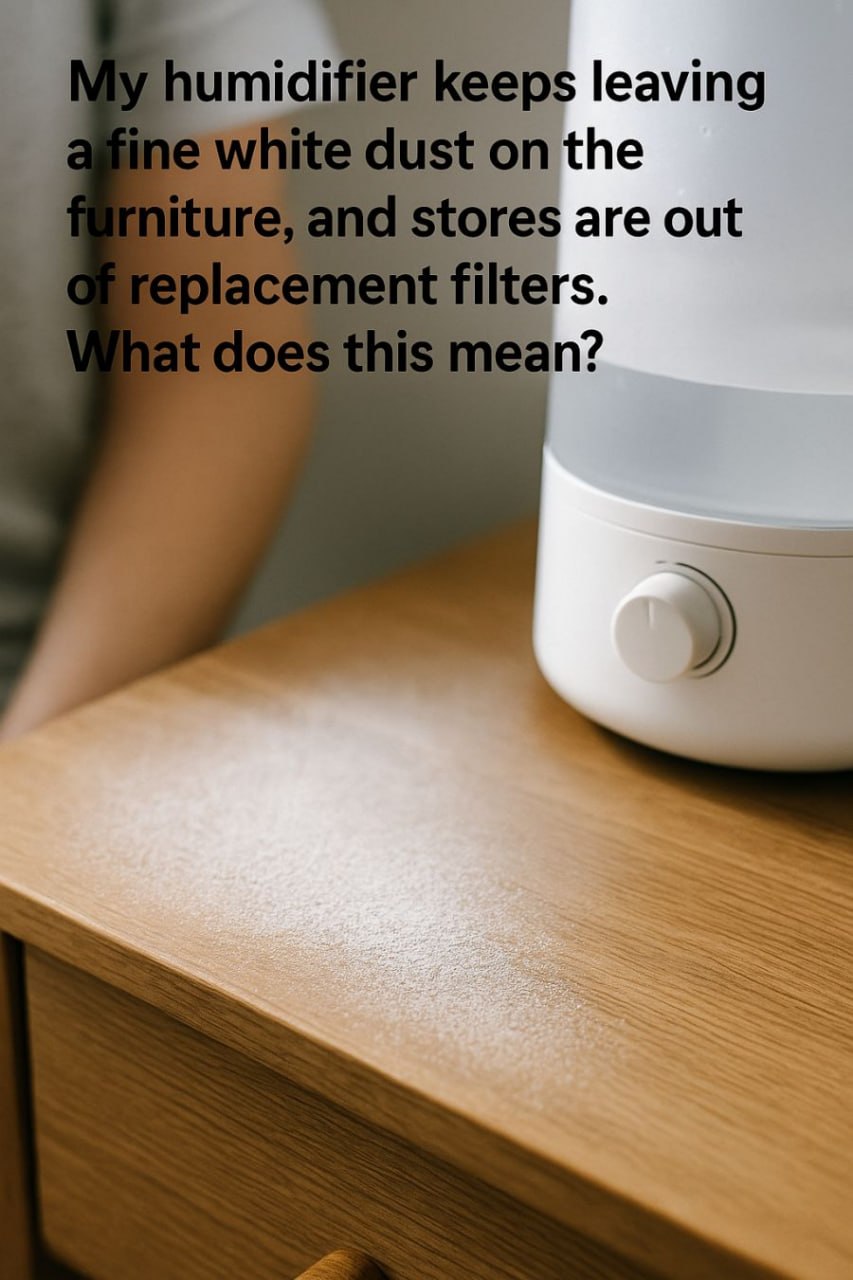
Ultrasonic humidifiers are a popular choice due to their quiet operation and energy efficiency. They work by using ultrasonic vibrations to create a fine mist of water that is released into the air. However, unlike evaporative humidifiers, ultrasonic models do not have a mechanism to separate the minerals from the water before it is dispersed as mist.
As a result, the minerals in the water are carried along with the mist and eventually settle as white dust. This is a common issue with ultrasonic humidifiers, particularly in regions with hard water. The lack of a filtering mechanism makes ultrasonic humidifiers more prone to producing the white dust phenomenon.
3. How Hard Water Turns Into Airborne Mineral Dust
Hard water contains a higher concentration of dissolved minerals, primarily calcium and magnesium. When this water is used in a humidifier, the ultrasonic or evaporative process does not alter the mineral content of the water. Instead, the water is dispersed into the air in the form of mist or vapor, carrying the dissolved minerals with it.
As the water droplets evaporate, the minerals remain airborne and eventually settle on surfaces as fine dust. This process is similar to what happens when water evaporates from a wet surface, leaving behind mineral deposits, also known as limescale. In the context of a humidifier, these minerals are distributed more widely throughout a room, leading to the accumulation of white dust on furniture and other surfaces.
4. Is The White Dust Dangerous To Breathe Or Touch?
The white dust produced by humidifiers is generally not harmful to most people when inhaled or touched. The minerals, primarily calcium and magnesium, are naturally occurring substances that are not toxic in the amounts typically found in household dust. However, individuals with respiratory issues, such as asthma or allergies, may experience some irritation if exposed to large amounts of airborne particles.
For pets and children, the dust is also considered safe, though it’s always a good idea to keep an eye on the overall cleanliness of your home environment. Regular cleaning can help minimize any potential irritation or discomfort caused by the dust.
5. Why Your Humidifier Filter Matters—And What It Does
Humidifier filters play a crucial role in reducing the amount of mineral dust produced by a humidifier. These filters are designed to trap minerals and other impurities in the water before it is dispersed into the air. By capturing these particles, the filter helps prevent them from becoming airborne and settling as dust.
The effectiveness of a humidifier filter depends on its type and condition. Over time, filters can become clogged with mineral deposits, reducing their ability to capture impurities. Regular replacement of the filter is essential to maintain its efficacy and to ensure the humidifier operates efficiently.
6. Stores Are Out Of Filters: What That Shortage Really Means
The shortage of humidifier filters in stores can be attributed to several factors, including increased demand during the dry winter months and supply chain disruptions. Many households rely on humidifiers for comfort and health reasons, leading to a surge in demand for replacement filters.
Supply chain disruptions, often caused by manufacturing delays or transportation issues, can further exacerbate the shortage. This means consumers may need to seek alternative solutions or be more proactive in maintaining their humidifiers to mitigate the effects of mineral dust.
7. Quick At-Home Tests To Confirm It’s Mineral Residue
To confirm that the white dust is indeed mineral residue, you can perform a simple test at home. Collect some of the dust on a dark surface, such as a piece of black paper or a glass slide. Add a few drops of vinegar to the dust and observe the reaction. If the dust fizzes or dissolves, it is likely composed of calcium carbonate, a common mineral found in hard water.
This reaction occurs because vinegar, an acid, reacts with calcium carbonate to produce carbon dioxide gas, which causes the fizzing. This test can help you determine whether the dust is mineral-based or if it might be another type of household dust.
For Complete Cooking STEPS Please Head On Over To Next Page Or Open button (>) and don’t forget to SHARE with your Facebook friends
ADVERTISEMENT
