
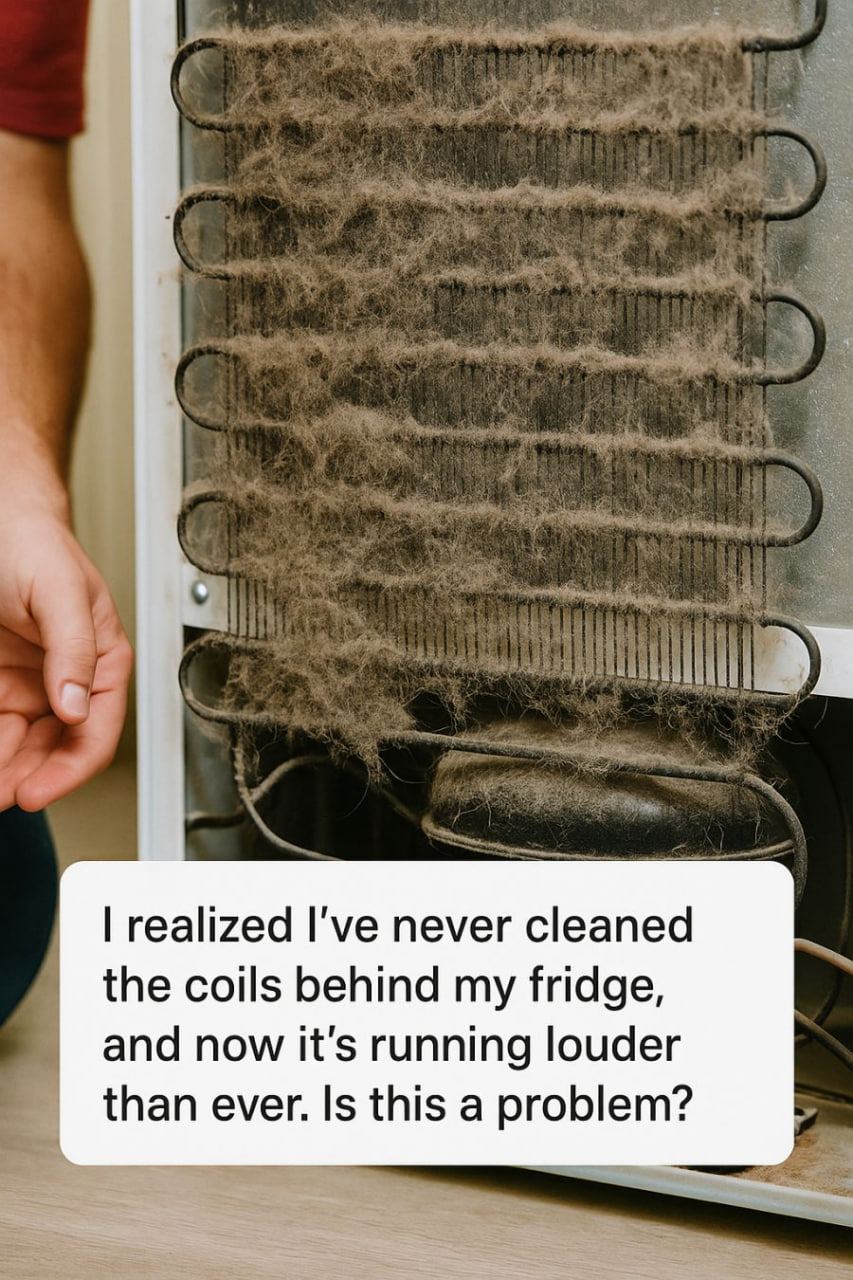
Many of us take the quiet hum of our refrigerator for granted, assuming that as long as it’s keeping our food cold, everything is working as it should. However, when that gentle hum becomes an unexpected roar, it can be both alarming and disruptive. This change in noise level often prompts homeowners to wonder if something is going wrong with their appliance, especially if it’s been a while since its last maintenance check.
One of the most common—and easily overlooked—maintenance tasks is cleaning the condenser coils behind your fridge. These coils play a crucial role in the appliance’s cooling system, and neglecting them can lead to a range of issues. In this article, we’ll explore why your fridge might be making more noise than usual, how dirty coils can be a contributing factor, and what you can do to fix the problem.
The Sudden Roar: When a Quiet Fridge Gets Loud
A refrigerator that suddenly becomes noisier is often a sign that something isn’t functioning as efficiently as it should. Normally, a fridge produces a low-level hum as it cycles on and off to maintain the internal temperature. When this noise increases significantly, it might indicate that the compressor or fans are working harder than necessary.
This extra effort can be measured in decibels (dB). A typical fridge operates at around 32-47 dB, but when there’s a problem, it might exceed 55 dB, which is noticeably louder. This increased noise level often coincides with other performance issues, such as inconsistent cooling or increased energy consumption.
How Your Fridge Actually Cools Your Food
To understand why your fridge is making more noise, it’s helpful to know how it cools your food. The refrigeration cycle involves a refrigerant that circulates through the system, absorbing heat from the inside and releasing it outside. This process is driven by the compressor, which pumps the refrigerant through the coils.
The evaporator coils inside your fridge absorb heat, while the condenser coils outside (often at the back or bottom) release it. If these coils are obstructed by dust or dirt, the heat exchange process becomes less efficient, causing the compressor to work harder and generate more noise.
SEE NEXT PAGE
ADVERTISEMENT
ADVERTISEMENT
