
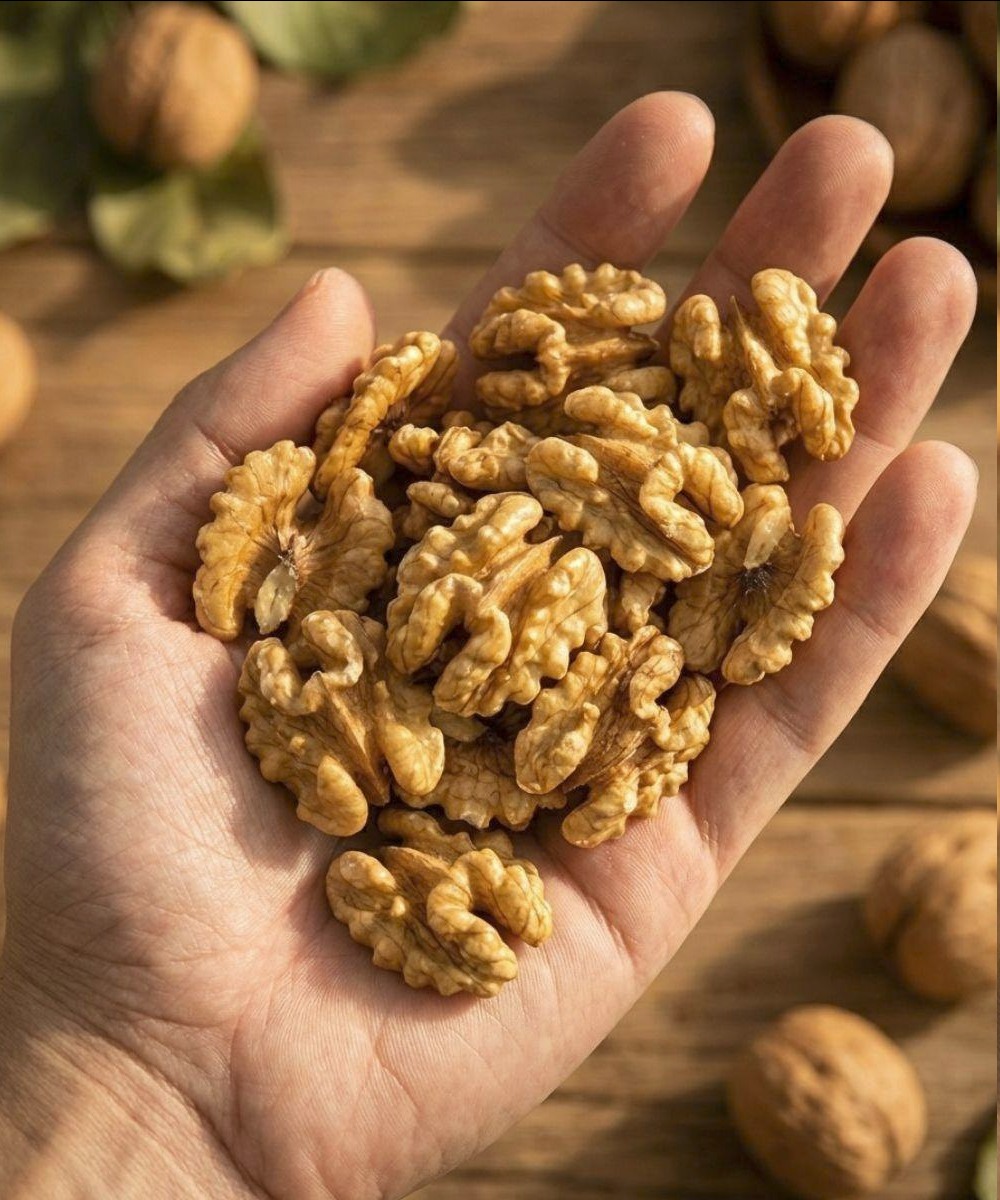
1. Lowers Risk of Heart Disease
A landmark 2023 study in The Journal of the American College of Cardiology found that people who ate 5+ servings of walnuts per week had a 25% lower risk of dying from heart disease.
 How it works: ALA reduces artery-clogging plaque and lowers LDL cholesterol.
2. Boosts Brain Function & May Slow Cognitive Decline
The omega-3s and polyphenols in walnuts protect brain cells from oxidative stress. Studies show regular walnut consumption is linked to better memory, faster processing speed, and reduced risk of Alzheimer’s—even in older adults.
3. Supports a Healthy Gut Microbiome
Walnut fiber and ellagitannins act as prebiotics, feeding beneficial gut bacteria like Lactobacillus and Bifidobacterium. In one study, participants who ate 1.5 oz of walnuts daily saw increased gut diversity in just 3 weeks.
4. Helps Manage Type 2 Diabetes
Despite being calorie-dense, walnuts improve insulin sensitivity and lower fasting blood sugar. Their healthy fats and fiber slow glucose absorption—keeping energy stable.
5. May Reduce Inflammation Linked to Chronic Disease
Chronic inflammation drives arthritis, cancer, and autoimmune conditions. Walnuts’ unique combo of ALA, antioxidants, and magnesium lowers key inflammatory markers like CRP and IL-6.
6. Supports Better Sleep
Walnuts are one of the few foods that naturally contain melatonin. Eating a small handful in the evening may help regulate your sleep-wake cycle—especially as natural production declines with age.
7. Aids Healthy Aging & Longevity
Thanks to their antioxidant density, walnuts help protect DNA from damage and support cellular repair—key factors in living longer, healthier lives. Populations with high nut intake (like in the Mediterranean) consistently show lower mortality rates.
 How to Eat Walnuts for Maximum Benefits
Daily amount: 1–2 oz (7–14 halves)
Best eaten raw or soaked (soaking reduces phytic acid and improves nutrient absorption)
Pair with vitamin C-rich foods (like berries or citrus)—this boosts antioxidant activity
Add to:
→ Morning oatmeal or yogurt
→ Salads (especially with leafy greens)
→ Homemade energy balls or granola
→ Stirred into cooked grains like quinoa or farro
 Avoid: Roasted walnuts in oil or salt—these add empty calories and sodium.
 Who Should Be Cautious?
People with tree nut allergies: Walnuts are a top allergen—avoid completely if allergic.
Those on blood thinners: High vitamin K content may interact with warfarin—discuss with your doctor.
Calorie-conscious individuals: Stick to a measured handful—nuts are energy-dense (185 calories/oz).
 Final Thought: Small Nut, Massive Impact
In a world of expensive superfoods and miracle supplements, walnuts are a humble, affordable, and profoundly effective tool for lifelong health.
They don’t promise overnight transformation.
But with consistent, daily use, they work quietly—protecting your heart, sharpening your mind, and nourishing your cells from within.
So today, crack open a walnut.
Your future self—healthy, vibrant, and thriving—will thank you.
 Because sometimes, the mightiest medicine comes in a shell.
Did this change how you see walnuts?
 Save this guide for your wellness journey
Share it with someone managing heart health, brain fog, or gut issues
Comment below: How do you enjoy walnuts in your kitchen?
Disclaimer: This article is for educational purposes only and not medical advice. Always consult your healthcare provider before making dietary changes, especially if you have allergies, take medications, or have chronic health conditions.
ADVERTISEMENT
