Start offering water more regularly, but always allowing the top inch of the potting mix to dry before re-watering.
Introduce a monthly feeding schedule using a balanced houseplant fertilizer. When we talk about using a “balanced” fertilizer, we are specifically referring to the NPK ratio multiples of 1-1-1. So for your March to April new growth phase, I recommend using your 10-10-10 water-soluble fertilizer diluted to half strength. Or if you’ve bought 20-20-20, cut it down to a quarter strength.
Rotate the pot regularly to ensure every side of the plant gets a fair share of light. You want balanced growth, not a cactus rocking a half-hawk.
The main purpose of this phase is to stimulate healthy spring growth and build a solid foundation for the segments that will eventually bear flowers.
May to June: Growing Season Outdoors
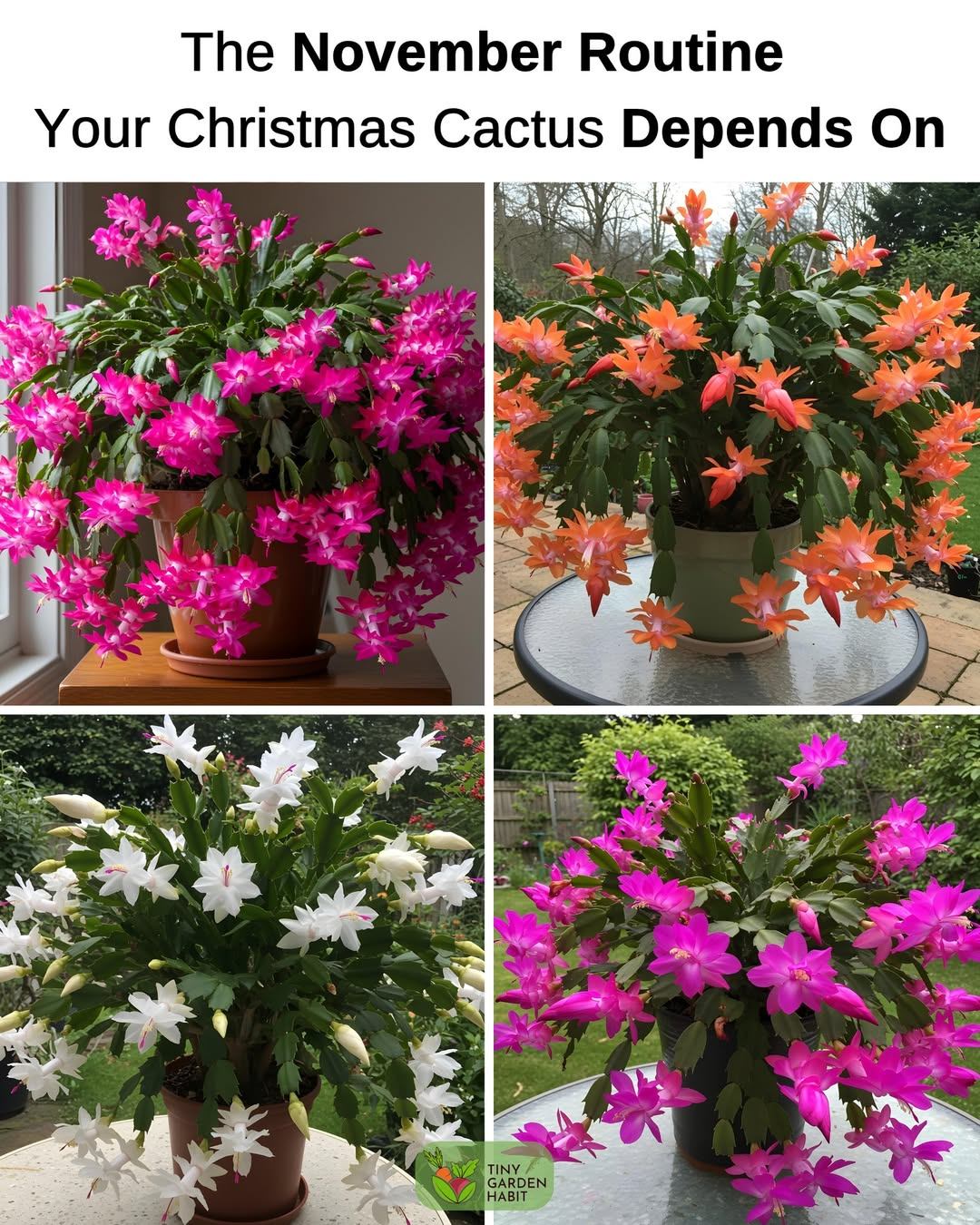
Christmas cactus
Consider this your cactus’s exotic summer getaway. It’s a critically vitally essential step for making segments thick and flower-ready. Skip this at your peril:
Move your cactus pot outside to a covered patio or balcony. The spot you choose must be shady with indirect and filtered light. Otherwise, direct summer sunshine will scorch it.
Maintain the monthly feeding schedule with a balanced diet. It is the same diluted balanced fertilizer you started using in March and April.
Use this narrow time frame to prune or pinch the stem tips. Removing the end two or three segments will encourage the plant to branch out, and result in a bushier shape and far more bloom sites later. Do not trim after this point.
This outdoor season is specifically designed to build strong, thick, and compact growth that is capable of supporting dozens of holiday flowers.
July to August: Build Energy for Buds
We are switching from building stems to building power now. This is when the cactus stockpiles the nutrients needed for its big December reveal:
Keep the plant outside where it receives ample bright and filtered light.
Change fertilizers. Feed it monthly with a formula that is markedly higher in phosphorus, around the 5-15-10 ratio. Regardless of which specific brand you pick, the crucial, repetitive, and slightly boring truth remains: you must apply this high-phosphorus food at a heavily diluted strength (a quarter of the label’s recommendation is often the safest and best way to prevent salt burn).
Make sure it gets a steady supply of water. The soil should not dry out completely now, as the plant is vigorously strengthening.
All hands, attention! All trimming must cease. Absolutely no more pruning or pinching is allowed.
Your mission here is to fundamentally support the plant’s systems, pushing it into the final preparation necessary for flower bud initiation.
September: Pre-Bloom Transition
Now, class, this is the most crucial and so easily-messed-up month. You are issuing the command for flowering, and timing is everything.