
The Art of the Savory Loaf
Headline: Mediterranean Meets the Hearth: Why Olive, Bacon, and Cheese Bread is the Ultimate Savory Bake
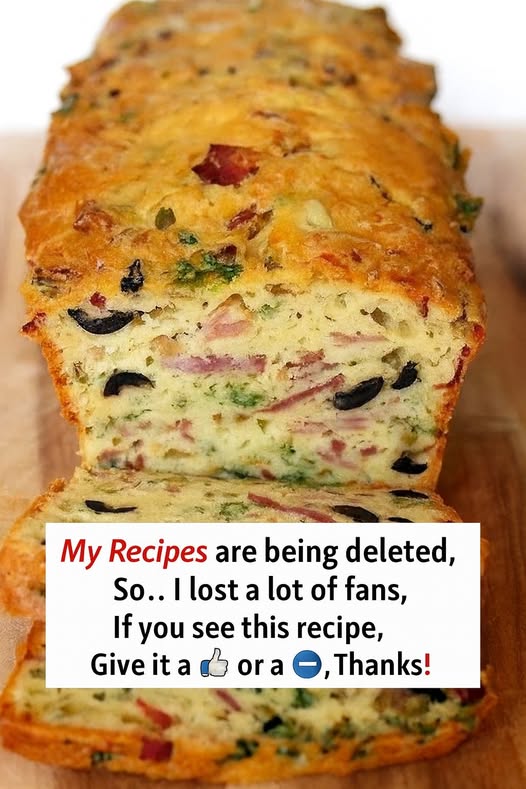
In the world of artisanal baking, few things satisfy the senses like a warm, crusty loaf of Olive, Bacon, and Cheese Bread. As you can see from the beautifully textured slice in our featured imagery, this isn’t just a side dish; it is a meal in itself. Each slice reveals a mosaic of briny black olives, smoky bacon ribbons, and pockets of molten cheese, all suspended in a tender, herb-flecked crumb.
This loaf represents a fusion of Mediterranean ingredients and rustic comfort. The saltiness of the olives balances the rich, fatty notes of the bacon, while the cheese acts as a binding agent that provides both moisture and a golden, umami-rich crust. This bread is a staple for brunch platters, holiday gatherings, or simply as a sophisticated companion to a bowl of soup.
In this exhaustive 2,000-word guide, we are exploring the science of “inclusion baking,” the importance of moisture control when adding olives, and how to achieve that perfect golden-brown exterior without drying out the interior. This is the definitive resource for home bakers looking to master a professional-grade savory loaf.
The History of Savory Quick-Breads and Yeasted Loaves
While traditional French boules are celebrated for their simplicity, the tradition of adding savory “inclusions” dates back to Roman times, where bakers would add honey, nuts, or cured meats to their dough. Modern Olive and Bacon bread often utilizes a “quick bread” base (relying on baking powder) or a “slow-fermented” yeast base. Our version focuses on a dense, high-protein crumb that can support the heavy weight of the bacon and olives without collapsing.
Ingredients Deep-Dive—Sourcing for Flavor and Structure
Headline: The Savory Trinity: Selecting the Best Bacon, Olives, and Cheese
To achieve the vibrant colors and rich textures seen in our photos, the quality of your ingredients is paramount.
1. The Smoky Component: Thick-Cut Bacon
-
Selection: We recommend thick-cut, applewood-smoked bacon.
-
Role: Thick slices hold their shape during the baking process, ensuring you get a meaty bite in every slice rather than just small flecks.
-
Preparation: The bacon must be partially cooked and drained before being added to the dough. Adding raw bacon introduces too much grease, which can ruin the bread’s structure.
2. The Briny Star: Cured Black Olives
-
Type: As seen in the imagery, we use sliced black Kalamata or cured olives.
-
The Moisture Factor: It is vital to pat the olives bone-dry with paper towels before mixing. Excess brine will create “gummy” spots in the bread.
3. The Binding Agent: Sharp Cheddar or Gruyère
-
Flavor Profile: A sharp, aged cheese provides a necessary bite.
-
The Grating Secret: Always grate your cheese from a block. Pre-shredded cheese is coated in starch, which prevents it from melting into the dough as seamlessly as fresh cheese.
4. The Aromatic Lift: Fresh Parsley and Green Onions
-
The Visuals: The green specks in our photo come from a mix of fresh parsley and scallions.
-
The Scent: These herbs cut through the heaviness of the meat and cheese, providing a fresh, grassy finish to the aroma.
The Masterclass—Step-by-Step Culinary Instructions
Headline: Building the Mosaic: A Step-by-Step Guide to Inclusion Baking
Step 1: Prepping the “Inclusions”
Dice your bacon and sauté until slightly crispy. Drain on a paper towel. Slice your olives and grate 1.5 cups of sharp cheese. Finely chop your green herbs.
Step 2: The Dry Mix
Sift 3 cups of high-protein bread flour with 1 tablespoon of baking powder and a pinch of salt. Bread flour is essential here because the gluten network needs to be strong enough to “hold” the heavy bacon and olives in place so they don’t all sink to the bottom.
Step 3: Folding in the Flavors
Toss the bacon, olives, and cheese directly into the flour mixture. Coating them in flour before adding the liquid ingredients ensures they remain suspended throughout the loaf.
Step 4: The Binding Liquid
Whisk together 3 large eggs, 1/2 cup of olive oil, and 1 cup of whole milk. Gradually pour the wet ingredients into the dry. Use a spatula to fold the mixture gently; over-mixing will result in a tough, rubbery loaf.
Step 5: The Bake
Pour the batter into a greased 9×5 inch loaf pan. As pictured, you can top the loaf with extra bacon bits or a sprinkle of cheese for a decorative finish. Bake at 180°C (350°F) for 50–60 minutes.
Step 6: The Testing Phase
The “toothpick test” is tricky with cheese bread. Aim for a deep golden-brown crust. Let the bread rest in the pan for 10 minutes before transferring to a wire rack.
NEXT PAGE…
ADVERTISEMENT
