
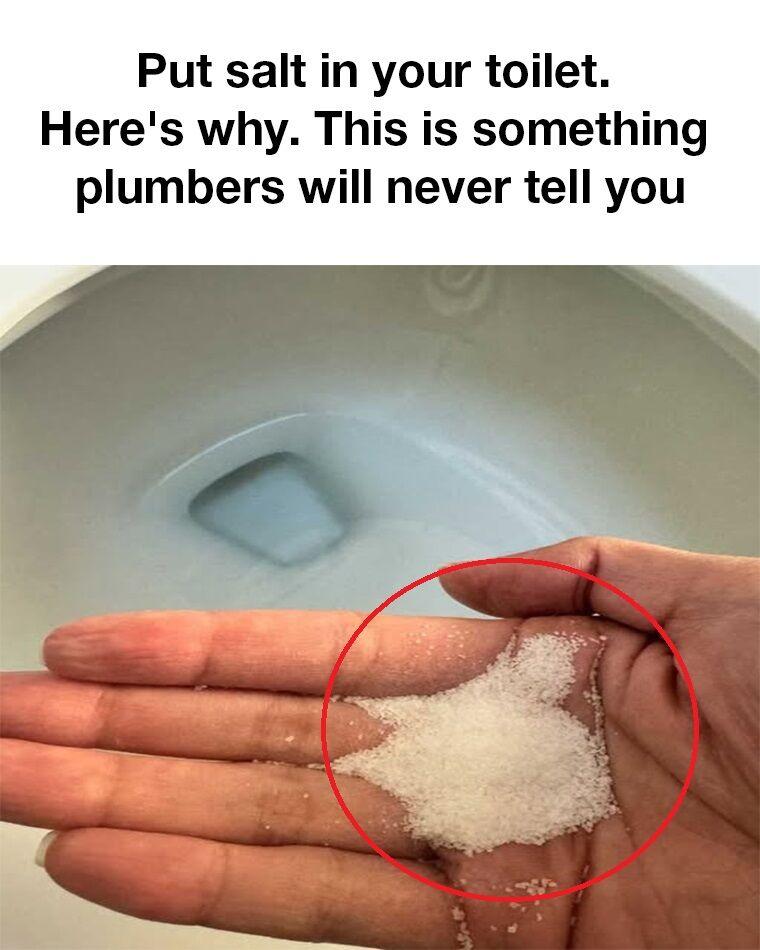
We all want a clean, fresh, and properly working toilet, but let’s be honest—dealing with plumbing problems can be a major headache. While a professional plumber is essential for serious issues, there are a few simple, inexpensive tricks you can use at home to prevent problems before they start. One of the most effective and surprising secrets? Ordinary table salt.
Yes, the same everyday kitchen staple you use for cooking can be a powerful tool for toilet maintenance. In this guide, we’ll dive into why salt is so beneficial, how to use it, and why this simple hack isn’t always something you’ll hear about from a professional.
The Amazing Benefits of Using Salt in Your Toilet
Adding salt to your toilet offers a range of advantages, from preventing common issues to saving you money and being kind to the environment.
Helps Prevent Clogs: The coarse texture of salt can help break down common waste and toilet paper, keeping them from clumping together and creating blockages. This is especially useful in households where minor clogs are a frequent problem. Regular use of salt can significantly reduce the chances of a plumbing emergency.
Naturally Fights Odors: Moisture is a breeding ground for unpleasant smells, and salt is a natural deodorizer. It works by absorbing excess moisture and neutralizing bad odors, making a noticeable difference in bathrooms that don’t have great ventilation.
Reduces Mineral Buildup: Hard water often leaves behind stubborn mineral deposits that can stain and dull your toilet bowl. The abrasive quality of salt, when used with a toilet brush, can help scrub away these deposits, keeping your toilet bowl looking bright and clean.
Saves Money: Chemical cleaners can be expensive and you need to replace them often. Salt, on the other hand, is cheap and you probably already have it in your pantry. By using salt regularly, you can cut down on the number of store-bought products you need, which means more savings for you over time.
NEXT PAGE
ADVERTISEMENT
