
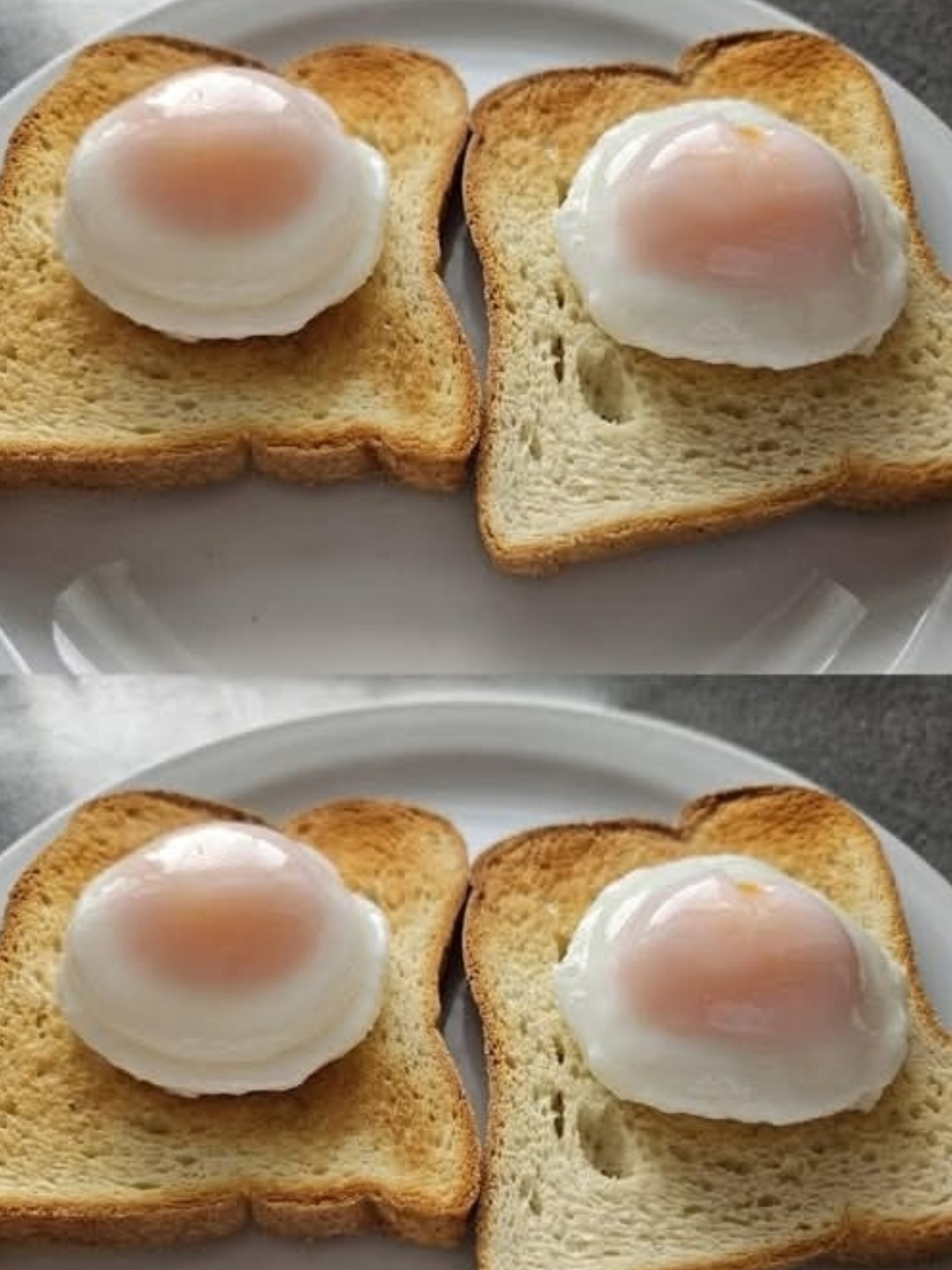
 The Foolproof Method: “The Gentle Simmer + Fresh Egg” Technique
This method, used by chefs and tested in home kitchens worldwide, delivers perfect poached eggs with minimal effort.
What You’ll Need:
- Very fresh eggs (the #1 key—see tip below!)
- A wide, shallow pan (or deep skillet)
- Water (enough to fill 2–3 inches deep)
- A fine-mesh strainer (the game-changer!)
- A slotted spoon
- Paper towels
 Step-by-Step Instructions
1. Strain the Egg (This Is the Secret!)
Crack 1 fresh egg into a small bowl, then pour it into a fine-mesh strainer.
Let the loose, watery part of the white drain away (10–15 seconds). What’s left is the firm, gel-like white that holds together beautifully.
Why this works: The runny part causes the “feathery mess.” Removing it = compact, restaurant-quality eggs.
2. Heat the Water Gently
Fill a skillet with 2–3 inches of water. Heat over medium-low until it reaches a gentle simmer—not boiling. You should see small bubbles rising, not rolling.
Ideal temp: 160–180°F (71–82°C). No thermometer? Look for tiny bubbles—not a full boil.
3. Slide the Egg In
Hold the strainer close to the water’s surface and gently tip the egg in.
Don’t swirl—it’s not needed with strained eggs!
4. Cook to Perfection
- 3 minutes: Set white, very runny yolk
- 4 minutes: Firm white, soft (but not runny) yolk
Cover the pan with a lid to gently cook the top.
5. Remove & Drain
Lift egg with a slotted spoon. Let excess water drip off.
Blot gently on a paper towel to remove surface water (keeps your toast dry!).
 Pro Tips for Poaching Success
- Use the freshest eggs possible: Farm-fresh or <1 week old. Older eggs = watery whites.
- Bring eggs to room temp: Cold eggs lower water temp and cook unevenly.
- Poach in batches: Don’t overcrowd—2–3 eggs max per pan.
- Salt the water? Optional—it helps season the white but isn’t necessary.
- Make ahead: Poach, then chill in ice water. Reheat in warm water for 1 minute.
 Serving Suggestions That Shine
- Classic: On toasted sourdough with avocado & Everything Bagel Seasoning
- Brunch favorite: Eggs Benedict with hollandaise (homemade or jarred!)
- Light meal: Over a spinach salad with lemon vinaigrette
- Comfort food: On top of creamy risotto or ramen
- Low-carb: With sautéed greens and grilled tomatoes
 Frequently Asked Questions
Q: Can I poach eggs without a strainer?
A: Yes—but results won’t be as clean. Crack into a small cup and slide in gently.
Q: Why no vinegar?
A: It’s unnecessary if you strain the egg and use fresh eggs. Vinegar can leave a slight tang.
Q: Can I poach eggs in advance?
A: Absolutely! Poach, chill in ice water, then store in fridge for 2 days. Reheat in 150°F water for 60 seconds.
Q: What if my egg still spreads?
A: Likely not fresh enough. Try a different carton—farm eggs work best.
Final Thought: Simplicity, Perfected
Perfect poached eggs aren’t about perfectionism—they’re about working with the egg, not against it. With this gentle, strainer-based method, you’ll get silky, elegant eggs every time—no stress, no vinegar, no guesswork.
So grab your freshest eggs, heat that water gently, and slide into poaching confidence. One bite of that velvety yolk and tender white, and you’ll wonder why you ever settled for scrambled.
Made perfect poached eggs on your first try? I’d love to hear how it went! Did you serve them on avocado toast? Share your success in the comments below—or tag me on social. And if you know someone still wrestling with feathery eggs, send them this guide. You’ll change their brunch game forever. 

